Recycling is one of the simplest sustainability topics to introduce in early learning because children see waste every day.
Each item can become a learning moment. For preschool and early primary students, recycling education works best when it is practical, visual and hands-on. Young children do not need long explanations about waste systems. They need simple routines, clear examples and repeated opportunities to practise making better choices.
The classroom is one of the best places to build these habits. When recycling becomes part of daily learning, children begin to understand that small decisions matter.
Why recycling belongs in early learning
Recycling is more than knowing which bin to use. It helps children develop observation, problem-solving, responsibility and care for their environment. It also connects naturally with everyday learning areas.
Science
Language
Social Responsibility
Numeracy
Visual Recognition
Classroom Routines
These activities do not need to be complicated. The strongest learning often comes from simple, repeated moments.
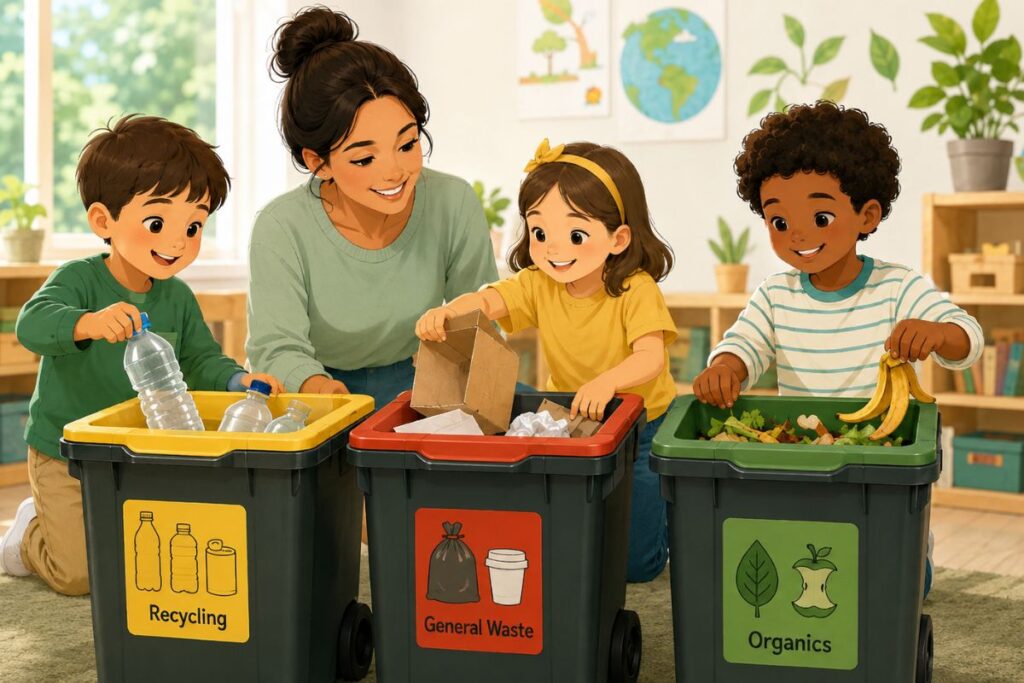
A bin sorting game is one of the easiest ways to introduce recycling to young children. Set up three labelled areas or mini bins:
Recycling
General Waste
Organics
Ask children to choose an item and place it where they think it belongs. After each turn, ask simple questions: What is this item made from? Can it be recycled? Is it food waste? Which bin do you think it belongs in?
The goal is not to make every child correct straight away. The goal is to help them observe, think and learn through practice.
💡 Teacher tip: Use real clean items where safe, and printed pictures for items that are messy, sharp or unsafe. For younger children, start with only two bins before introducing more categories.
A lunchbox waste audit helps children connect recycling with their own daily routines. After lunch or morning tea, invite students to look at the types of waste created in the classroom.
Ask the class to group the items by type. Which items could go in recycling? Which items are food scraps? Which items could we avoid next time?
For early primary students, turn the audit into a simple counting activity:
💡 Teacher tip: Keep the activity positive. Avoid making children feel bad about what is in their lunchbox. The aim is awareness, not blame.
Picture matching is useful for preschool and early primary students because it supports visual learning. Prepare picture cards showing common items and ask students to match each item to the correct bin.
This can be done individually, in small groups or as a whole-class activity. For younger children, keep the item list short and use familiar examples. For older children, add more confusing items and discuss why they are harder to sort.
💡 Teacher tip: Use Australian-style bin colours where possible. Many children recognise yellow for recycling, red for general waste and green for organics — although local council bin systems can vary.
Stories are a gentle way to introduce environmental responsibility. Read a picture book or short classroom story about rubbish, recycling, nature or caring for the planet. After the story, ask open-ended questions.
Discussion questions to try:
💡 Teacher tip: Keep the discussion simple and hopeful. Children should feel empowered, not worried.
Food scraps are easy for children to understand because they see them every day. If your school or early learning centre has a compost bin, worm farm or food scraps system, use it as a learning opportunity.
✅ Goes in compost
✕ Does not belong
💡 Teacher tip: If your centre does not have a compost system, use pictures or a simple classroom discussion. You can still teach the difference between food scraps and packaging.
Role-play helps children practise real-life situations. Set up a small recycling station in the classroom with pretend bins, clean packaging and picture cards. Children can take turns playing different roles.
The Recycler
The Classroom Helper
The Bin Checker
The Teacher
The Sorting Expert
The Question Asker
💡 Teacher tip: Encourage children to say “Let’s check” when they are unsure. That is an important learning habit — not just for recycling, but for life.
A classroom poster can help reinforce recycling routines. Ask students to help create a simple visual poster showing what belongs in each bin. Include drawings, printed images or photos of real classroom items.
Display the poster near the classroom bins so children can refer to it during the day.
💡 Teacher tip: A poster made by children is often more meaningful than a printed sign because they feel ownership of it.
Take children on a short recycling detective walk around the classroom or school. Ask them to look for bins, paper scraps, packaging, reusable items, recycling signs and places where rubbish sometimes appears.
Then return to the classroom and discuss what they found. How could we make recycling easier in our classroom?
💡 Teacher tip: Keep the walk short and focused. For younger children, choose one small area rather than the whole school.
How Learn Recycle can support classroom learning
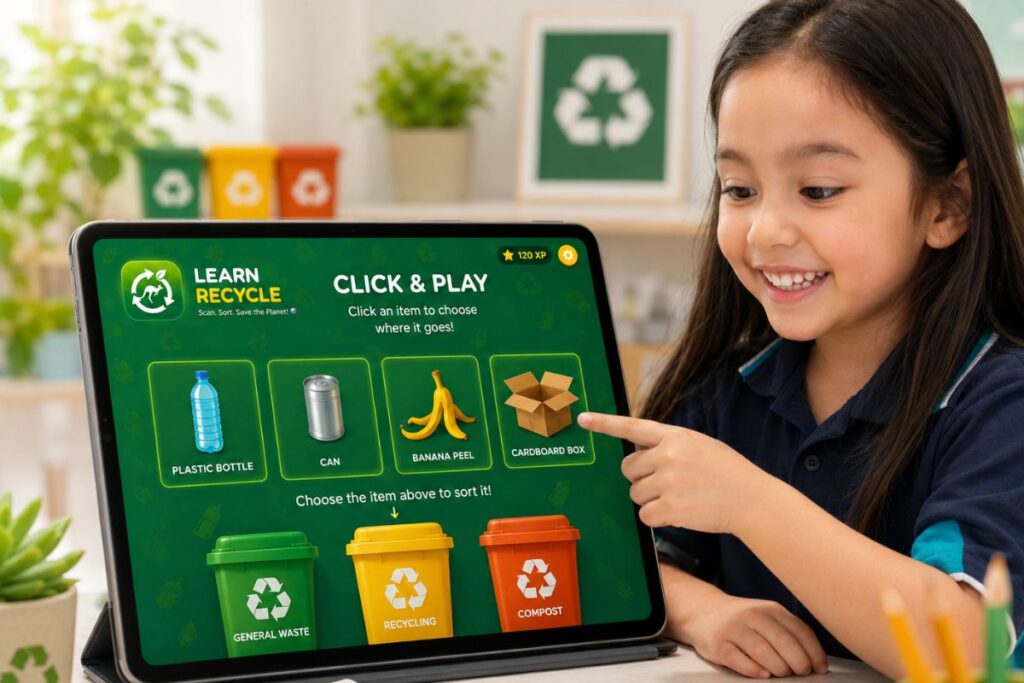
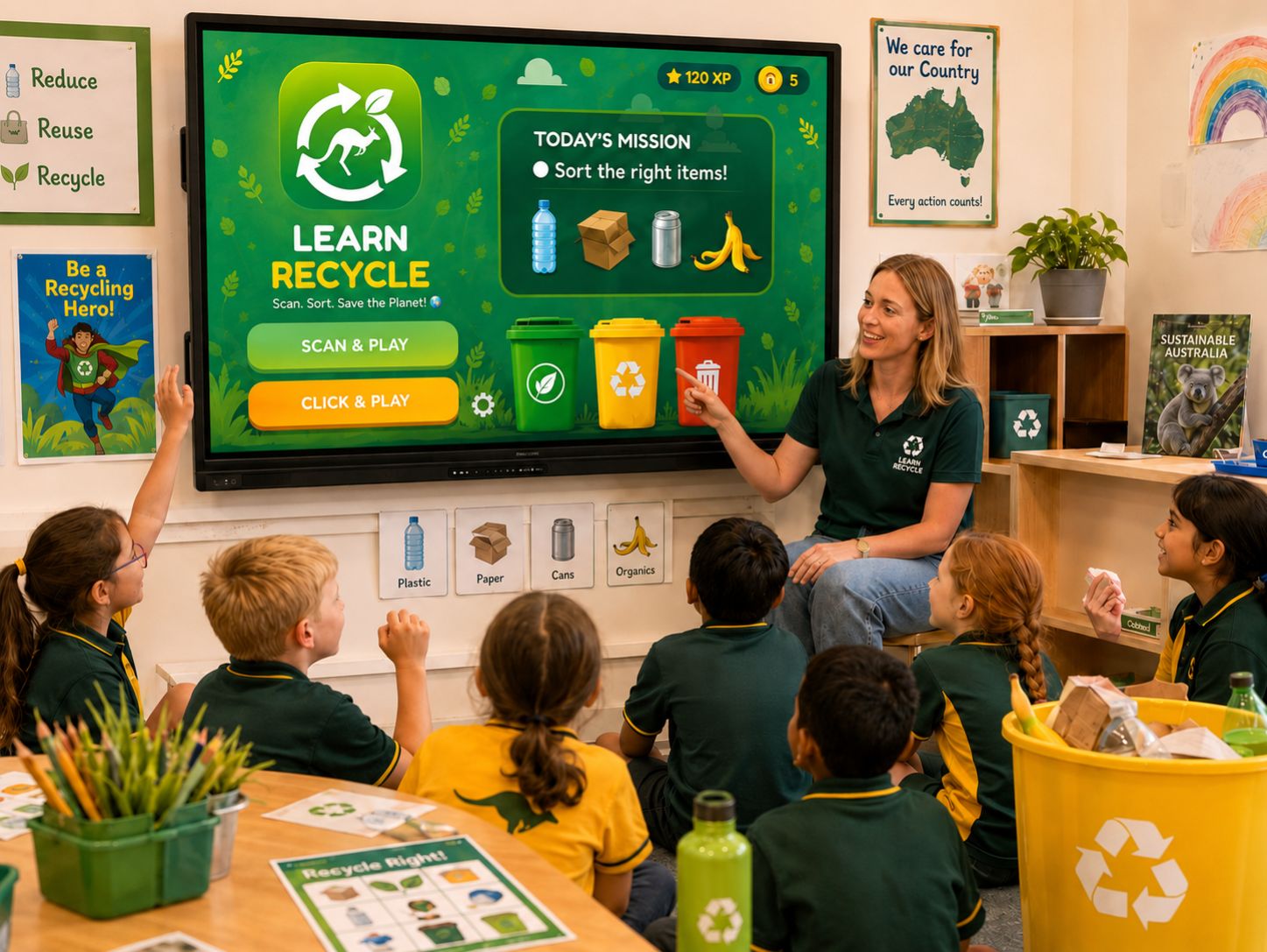
Learn Recycle can be used as a simple digital tool to support recycling education in preschool and early primary settings. The app is designed to help children practise waste sorting through interactive play — giving children a way to recognise everyday items, think about where they belong and build confidence through repeated learning.
Group discussions
Use on a shared screen to spark class conversations about waste sorting.
Sustainability lessons
Integrate into existing sustainability and environmental education units.
Digital learning rotations
A simple independent or paired activity for digital learning time.
Classroom recycling routines
Reinforce daily bin habits with a quick sorting session on the app.
The app should not replace real-world learning. Instead it can support it. A child who practises sorting a bottle in the app may then recognise a similar bottle after lunch and ask which bin it belongs in. That is where learning becomes habit.
Keeping recycling education age-appropriate
When teaching recycling to young children, it is important to keep the message simple and positive. Children do not need to carry the weight of environmental problems. They need to feel capable of helping in small ways.
Good recycling education for young children should be:
A useful classroom phrase:
“If we are not sure, we check.”
Small classroom habits can create long-term impact
Recycling education does not need to be complicated to be meaningful.
These small moments matter. When children practise recycling in early learning environments, they begin to understand that their actions are connected to the world around them. For teachers and educators, the opportunity is powerful.
Learn Recycle Team
Australian educational recycling initiative · learnrecycle.com.au
Early Learning
For Educators